

The seat map gets all the attention. The person standing at the podium during a bad afternoon is the one who actually decides how your day turns out.
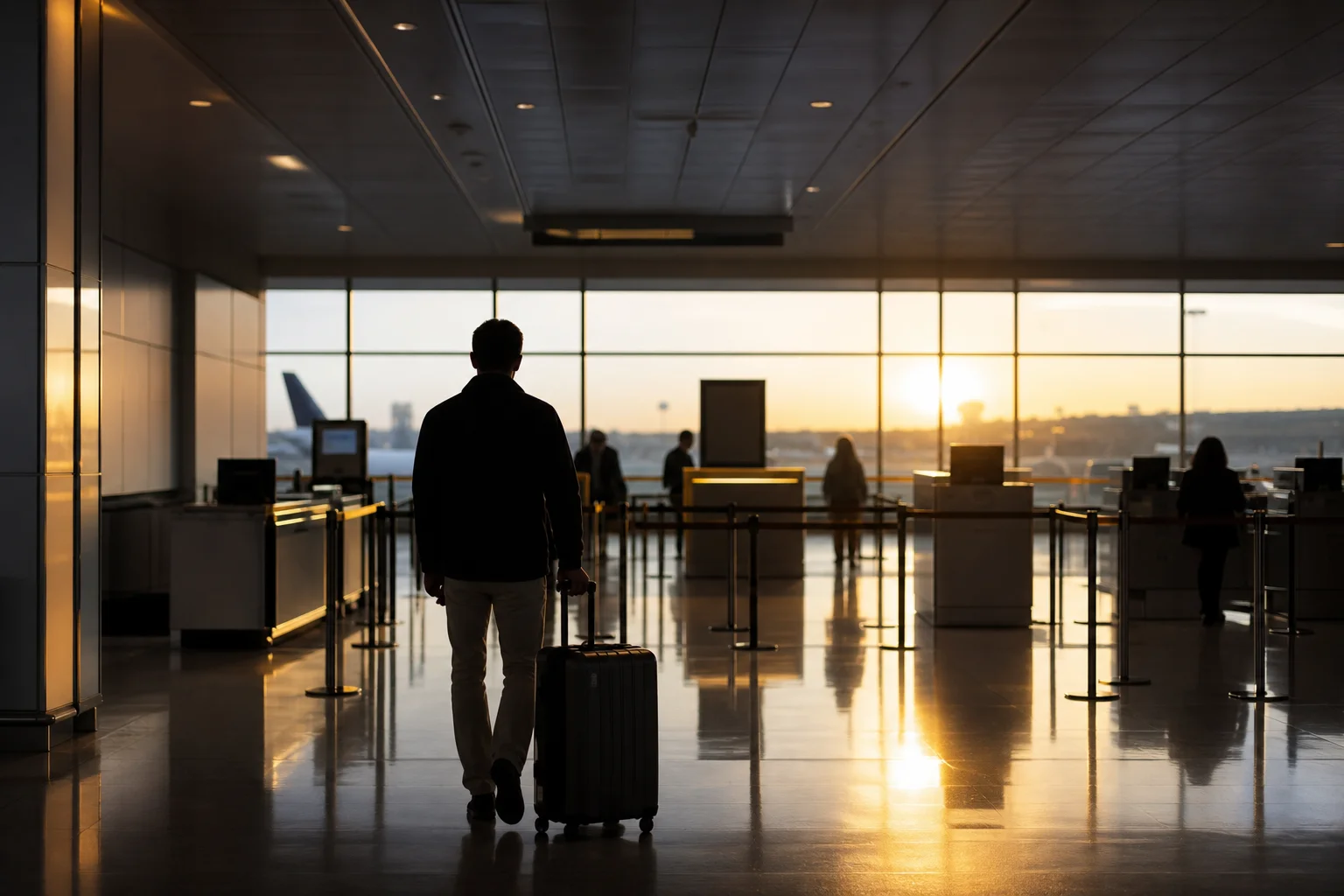
I spend a lot of time in this space writing about seats, cabins, lounges, and the mechanics of getting from a regional airport to somewhere useful. Those things matter. But if I’m honest about the moments that actually made a trip work or fall apart, most of them didn’t happen in a cabin at all. They happened at a gate podium, usually during the fifteen minutes when everything was going wrong.
What follows is a composite scene, not a transcript of one specific day. I’ve had versions of this interaction enough times, at enough hubs, that I can describe it as a type rather than an event. Think of it as an illustration of a pattern, not a report on a particular flight.
The Setup: A Normal Meltdown
Picture a busy connecting hub on a weather-disrupted afternoon. A bank of flights has backed up. The inbound aircraft is late, the outbound crew is creeping toward a duty-time wall, and the departure board is starting to fill with the amber-and-red pattern that means everyone at the gate already knows the trip is about to get complicated.
There’s a version of this scene where the gate agent disappears behind the podium, makes announcements only when forced to, and treats the growing line of anxious passengers as an inconvenience. I’ve stood in that line. It’s not fun, and it doesn’t actually change the outcome, but it makes a bad afternoon feel worse.
Then there’s the other version, and it’s the one worth writing about.
What Good Actually Looks Like
In the version I want to describe, the agent starts narrating before anyone asks. Not vague reassurance, actual information: the inbound aircraft’s status, a realistic new departure window, and an honest acknowledgment that some connections in the gate area are not going to work. That last part matters more than it sounds. Passengers can handle bad news. What wears people down is silence followed by a surprise.
Then the agent starts working the room instead of waiting for the room to come to the podium. A traveler with a tight connection gets flagged and rebooked before the current flight has even boarded, rather than after they’ve missed it standing at a different podium two concourses away. Someone traveling with an elderly parent gets a heads-up about which door will be fastest for their new connection. None of this requires elevated status. It requires an agent who has decided that solving problems before they compound is a better use of the next twenty minutes than reacting to them one at a time.
“I can’t make the weather go away, but I can make sure you’re not the last person to find out what it did to your day.”
That’s the kind of thing a good agent says, not because it’s scripted, but because it’s true and it resets the room. It converts a group of frustrated strangers into people who feel like someone is actually on their side.
The Seat Didn’t Matter That Day
Here’s the part that’s relevant to how I think about premium travel generally. On the day I’m describing, my seat assignment was irrelevant. It didn’t matter whether I had extra legroom or a middle seat in the back, because the entire value of the day came from whether I made my connection, whether my bag came with me, and whether I knew what was happening early enough to make good decisions. All of that got decided at the podium, before boarding, by one person’s judgment and effort.
I’ve had premium seats on flights that felt worthless because the day around them was chaos and nobody at the gate was managing it. I’ve had middle seats on flights that felt like a win because the agent at the podium made sure I wasn’t blindsided and got me rebooked cleanly. If you’re optimizing your travel life purely around cabin and seat map, you’re optimizing the part of the day that’s easiest to see and, on a bad day, often the least important variable.
How to Be the Passenger a Gate Agent Wants to Help
Frontline agents are triaging dozens of problems at once during an irregular-ops afternoon. You can’t control who’s working the podium, but you can control how you show up. Be specific instead of vague: state your actual constraint (“I have a 40-minute legal connection in Charlotte, can you check if it’s still workable”) rather than just expressing frustration. Say thank you, even when the news is bad. Don’t ask the same question three different ways hoping for a different answer. And if the agent is clearly mid-crisis with someone else, wait your turn instead of talking over the situation. None of this guarantees a better outcome, but it makes you someone an agent is glad to help rather than someone they’re trying to get away from.
Why This Is Underrated in Travel Writing
Most travel coverage, including a fair amount of what gets written about premium American Airlines travel, treats the human element as color commentary rather than substance. Reviews focus on seat pitch, lie-flat angles, lounge buffets, and boarding sequences because those things are easy to photograph and easy to compare. Service quality is harder to quantify, so it gets a sentence instead of a section.
But if you fly enough, you learn that the aircraft is mostly a known quantity. The variable that actually swings a trip from smooth to miserable, especially during weather or mechanical disruption, is almost always the quality of the person managing the disruption. A skilled, proactive gate agent can rebuild your day in real time. A disengaged one can let a fixable problem cascade into a missed meeting or a lost night.
What I’ve Started Doing Differently
I’ve stopped treating a calm, competent gate agent as a nice surprise and started treating that interaction as one of the most important parts of the trip worth noticing and writing about. When it goes well, I say so, to the agent directly and sometimes here. When it goes poorly, I try to separate “this person is having a rough shift during a systemwide problem” from “this person made a bad day worse through inattention,” because those are different things and they deserve different reactions.
The Broader Point
This isn’t really an article about one gate agent. It’s an argument for paying attention to the entire chain of people who touch a trip, not just the ones you see for three hours in a cabin. The person at check-in, the person at the podium, the person at the jet bridge door, the flight attendant managing a full cabin during a delay. Any one of them can be the reason a bad day becomes tolerable or a fine day becomes a mess.
A proactive agent who narrates the situation and starts solving problems before they cascade, rather than waiting for the line to form.
Service quality is inconsistent and largely out of your control as a passenger, which makes it a frustrating variable to plan around.
This isn’t a product you choose, but it’s the single factor I now pay closest attention to when evaluating whether a disrupted day went well.
Any traveler who assumes premium travel is only about the cabin. It isn’t.
A good gate agent during irregular operations delivers more real value than an upgraded seat on a normal day. It’s the most underrated part of the flying experience, and it deserves more attention than it usually gets.

Leave A Comment