

A line of storms at the hub, one late inbound aircraft, and a meeting on the other end that doesn’t move. Here’s how I actually work the problem instead of just watching the board.
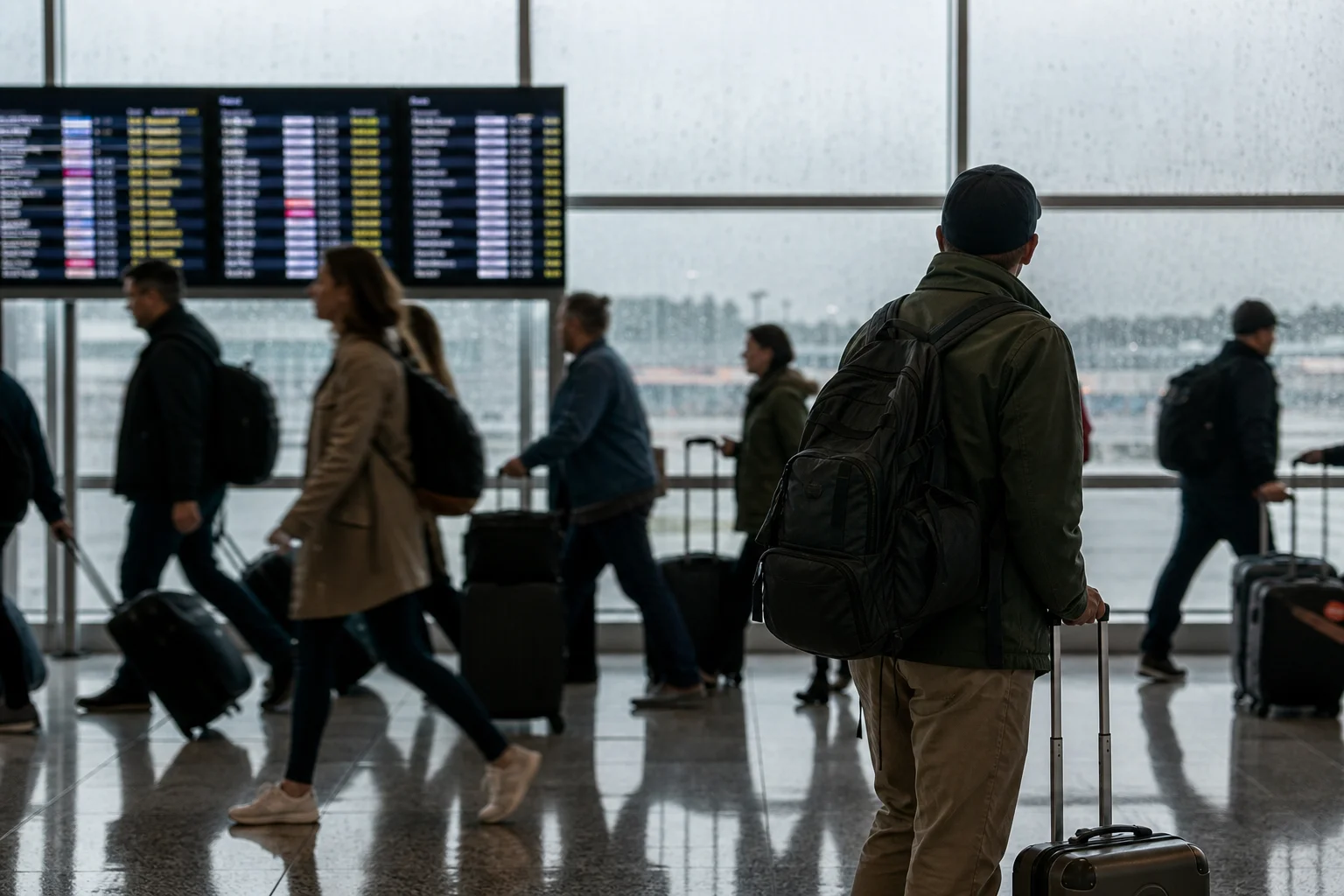
What follows isn’t a specific trip. It’s a composite of a scenario that has played out enough times, in enough versions, that I can describe it almost from memory: afternoon storms building over a hub like Charlotte or Chicago, a connecting flight that’s supposed to be routine, and a meeting on the other end that isn’t going to reschedule itself. If you connect through a hub more than a handful of times a year, some version of this has happened to you too, or it will.
The details change. The shape doesn’t. A line of thunderstorms moves toward the airport around midday. Ground stops start rippling through the system before anyone announces anything at your gate. Your inbound aircraft, sitting at a different gate an hour away, is now going to be late. Not canceled — just late, in the specific way that eats exactly the connection time you had and none of the padding you didn’t build in.
The First Five Minutes Matter More Than the Next Two Hours
Here’s what I’ve learned the hard way: the moment matters more than the crowd. The instant a delay posts to my flight — before the gate agent has a line, before the app pushes a notification to three hundred other people on the same itinerary — I’m already in the app looking at alternatives. Not refreshing to see if the delay improves. Looking at what else gets me there.
This is the single biggest lever in the entire recovery, and it has nothing to do with status, elite lines, or who you know. It’s just math. There are a fixed number of seats on the next few flights out, and a fixed number of people who are about to want them. The passengers who act in the first five minutes get to choose. The passengers who wait for an announcement get to be assigned whatever’s left.
The gate agent isn’t the problem and isn’t the solution. The app, five minutes ago, was the solution.
So the habit is simple, if not always easy to remember under stress: the second a delay shows up — on the board, in the app, from a crew member’s comment while boarding the inbound leg — I open the app and start looking at real alternatives before I need one. Not hypothetically. Specifically: what’s the next flight to my destination, what’s the next flight to an airport near my destination, and is there a routing through a different hub that avoids the weather altogether.
Know Your Backup Airports Before You Need Them
This is the part that separates a bad afternoon from a lost day. I don’t wait until I’m standing at a delayed gate to figure out where else I could land. If my destination has more than one reasonable airport nearby — a close-in field and a larger one 45 minutes further out — I already know that going in. If a rental car or a business colleague willing to do a pickup can close the gap, that’s a real option, not a last resort.
The same logic applies to which hub to connect through. If the storm is sitting on top of one hub, a routing through a different one might dodge it completely, even if it looks slightly less convenient on paper. A itinerary that looks 40 minutes slower but avoids the weather system entirely is often the faster option once you count the delay you’re not taking.
What I actually do in the first five minutes
The instant a delay posts, I open the app and check three things in order: (1) is there a later flight today that still works, (2) is there a routing through a different hub that avoids the same weather, and (3) is there a nearby alternate airport within driving distance of my final destination. I decide, then I act — before the gate line forms, not after.
Knowing When to Stop Fighting for the Original Plan
Somewhere in every one of these afternoons there’s a decision point: keep chasing the original itinerary, or accept that the meeting isn’t happening as planned and start managing the outcome instead of the flight. This is harder than it sounds, because giving up on the original plan feels like losing, even when it’s the correct call.
My rule of thumb is time-boxed. If getting to the original destination on the original day requires burning more than two or three hours actively working the problem — rebooking, re-rebooking, standing by for flights that may or may not clear — I start treating the meeting itself as the thing to save, not the itinerary. That might mean a phone call replaces the first hour of an in-person visit. It might mean I fly in that night instead of that morning and the meeting simply starts later. It rarely means the whole trip is wasted, but it does mean I stop pretending the original plan is still the plan.
Status Helps. It Isn’t a Plan.
Elite status and priority rebooking access are real and they do help — being further up a rebooking queue, or having a same-day change option that’s easier to execute, takes real friction out of a bad day. But status is a tool that makes a good decision faster. It isn’t a substitute for making the decision. I’ve watched travelers with excellent status stand around waiting for someone to fix things for them while travelers with none had already rebooked themselves onto a better option through the app. Don’t outsource the thinking just because you have priority in line.
The Gate Agent Didn’t Make the Storm
This should be obvious and somehow still needs saying: nobody at the airport controls the weather, and the gate agent in front of you did not create the ground stop, the late inbound aircraft, or the queue of frustrated passengers now three deep at their podium. Getting loud with that person doesn’t move you up a list. It just makes their next ninety minutes worse while accomplishing nothing for yours.
The travelers who get the best outcomes in these situations tend to be calm, specific, and quick — not because gate agents reward pleasantness with favors, but because a calm, specific traveler is easy to help fast, and a hostile one gets handled last by design or by simple human nature.
What I’d Do Differently Next Time
Every version of this scenario teaches something. The recurring lesson for me has been to build in more schedule slack on days when a meeting genuinely cannot move — flying the night before instead of the morning of, whenever that’s a realistic option. It costs a hotel night. It buys an entire storm system’s worth of insurance. That trade is almost always worth it when the meeting actually matters, and I don’t take it often enough.
The recovery is almost entirely within your control if you act in the first few minutes instead of waiting for an announcement.
Same-day connections through a single hub leave almost no margin when weather hits — the plan has one point of failure.
I’d keep the connection, but I’d build in more slack on days that actually matter.
Travelers willing to make a fast, calm decision instead of waiting in line for someone else to make it for them.
Weather delays aren’t really about the weather — they’re about who acts first. The app, checked the moment a delay posts, will usually get you further than any amount of waiting at the gate. That’s a habit worth building before you need it.

Leave A Comment