
A short-haul first class upgrade doesn’t buy you time in the air. It buys you a handful of specific things on the ground, and only some of them are worth paying for.
I get some version of this question a lot from people who see me pay for an upgrade on a flight that’s barely long enough to reach cruising altitude: “Isn’t that a waste on a short flight?” It’s a fair question, and the honest answer is that it depends entirely on what you think you’re buying. If you think you’re buying a better flight, you’re probably wasting your money. If you know exactly what you’re buying, it can be one of the better small purchases in business travel.
Let me walk through a specific, illustrative case: a roughly 70-minute domestic hop, paid upgrade running somewhere in the neighborhood of $120–180 depending on the day and the route. That range is representative of what I’ve seen offered at the gate or during booking on flights like this — not a quote for any particular ticket, and not something I’d treat as a fixed price. Some days it’s cheaper. Some days American doesn’t offer it at all because the cabin is already full of elites and instruments.
What Actually Changes on a Flight This Short
On a 70-minute flight, the physics of the cabin don’t leave room for most of what people associate with “first class.” There’s no real meal service. There’s barely time for a full beverage service if the flight is bumpy or the boarding runs late. The extra recline matters less when you’re only sitting in the seat for an hour. So if the seat itself and the food are the reasons you’re evaluating the upgrade, save your money — that part of the pitch mostly doesn’t apply below about 90 minutes.
What does change is almost entirely logistical, and it’s worth being precise about it:
Priority Boarding
This is the upgrade’s best feature on a short flight, and it’s underrated because it doesn’t feel like a benefit — it feels like just getting on the plane. But boarding ten to fifteen minutes earlier means your bag goes in the bin near your row instead of six rows back, you’re seated and settled before the aisle clogs, and you’re not the person doing the overhead-bin shuffle while people behind you sigh. On a short flight where you may be working right up until boarding, that ten minutes of not fighting for space is a real, if modest, value.
The Seat
Marginally wider, marginally more recline, an empty or near-empty middle seat situation up front. On a 70-minute flight this is nice. It is not transformative. If the entire case for paying rests on the seat, you’re overpaying for the difference.
A Drink and a Snack
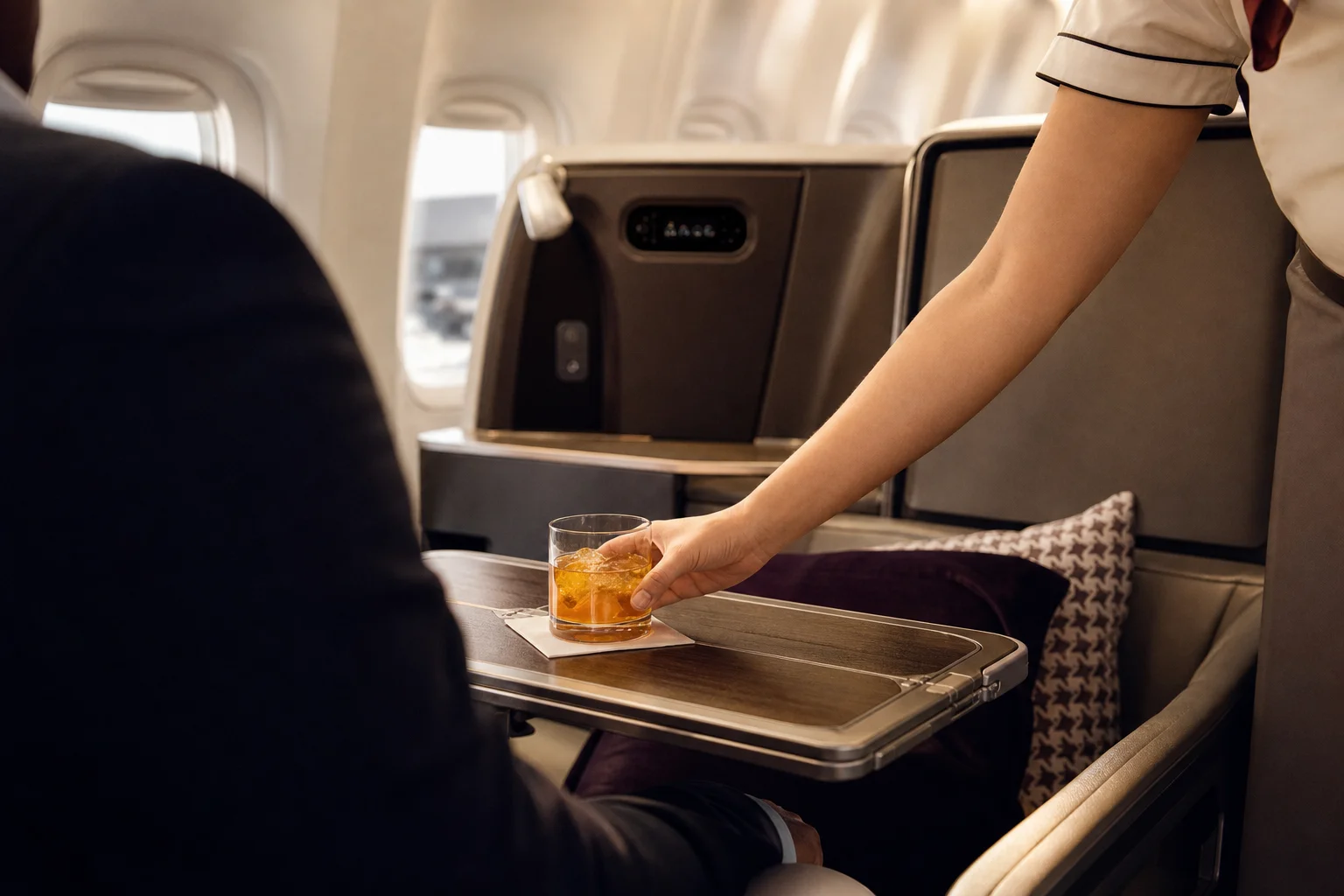
You’ll get a real glass instead of a plastic cup and a marginally better snack option. Pleasant. Not the reason to spend $150.
Priority Deplaning
This is the second genuinely useful item, and it’s the one people underrate the most. If you have a tight connection on the other end — the kind where you land at one gate and need to sprint to a departure eleven gates away with eighteen minutes on the clock — being first off the aircraft instead of eleventh can be the difference between making the flight and not. I’ve paid for upgrades purely for this reason and considered it money well spent even though I never touched the meal or cared about the seat.
On a short flight, you’re not paying for the seat. You’re paying for the ten minutes on either end of it.
What You’re Really Buying
Once you strip out the parts of the pitch that don’t apply to a short flight, what’s left is boarding priority, deplaning priority, and a marginally better seat and drink as a bonus. That’s a real product. It’s just a much narrower product than the airline’s marketing implies, and narrower than what you get on a three-hour or five-hour flight where the meal service, the extra legroom, and the rest room lines all start to matter in ways they simply don’t on a quick hop.
The other thing you’re sometimes buying, indirectly, is a status-adjacent perk: a better shot at getting through security or the jet bridge without friction, and occasionally more attentive service simply because the first class cabin on a short regional aircraft might only have eight to twelve seats and the crew has more bandwidth per passenger. That’s real, but it’s soft, and I wouldn’t build a purchase decision around it alone.
My Rule of Thumb
I pay for a short-haul upgrade when at least one of these is true: I have a connection under 45 minutes on the other end and deplaning first meaningfully protects it; I’m boarding with a bag I need in my own bin because I’m working immediately after landing; or the fare gap that day is small enough that it’s genuinely not worth debating. If none of those apply and I’m upgrading purely for the seat and the drink, I usually save the money and put it toward a longer flight later in the trip, where the same dollars buy a real meal, real recline, and real rest instead of ten minutes of convenience.
Where the Money Is Better Spent
This is the part of the framework I think gets skipped the most. Upgrade money isn’t free — it’s a budget, whether it’s cash or the mental account you keep for “travel comfort spend.” If you’re on a multi-leg trip with a short hop and a long haul in the same itinerary, I’d rather put the upgrade dollars, or the discretionary miles, toward the longer flight almost every time. A short-haul upgrade tops out at maybe forty-five minutes of meaningfully improved experience. A longer flight upgrade can change the entire arc of your day — whether you arrive rested and ready to work or wrung out and useless until noon.
The exception, again, is the tight-connection scenario. Protecting a connection has a value that isn’t about comfort at all — it’s about not missing the rest of your trip, and that’s worth paying for regardless of flight length.
| Seat | Modestly better; not transformative under 90 minutes |
|---|---|
| Boarding | The real win — genuinely saves time and hassle |
| Crew | Attentive, smaller cabin, less rushed |
| Food | Drink and snack only; no meaningful meal service |
| Value | Good when protecting a tight connection; marginal otherwise |
None of this means short-haul upgrades are a bad product. It means they’re a specific product, aimed at a specific problem — getting on and off the aircraft with less friction — and you should buy them for that reason, not because you’re picturing the wide-body first class experience shrunk down to fit a 70-minute flight. It doesn’t shrink down cleanly. Most of what makes long-haul first worth it simply isn’t present on a short hop, and pretending otherwise is how people end up feeling let down by a purchase that actually did exactly what it was supposed to do.
Priority boarding and deplaning — the only two benefits that genuinely change on a flight this short.
The seat and food, which barely have time to matter before you’re already descending.
Yes, but selectively — only when boarding or deplaning priority actually solves a problem I have that day.
Travelers with a tight connection, a bag that needs to be in their own bin, or work to finish right up to boarding.
A short-haul upgrade is worth it when you’re buying the ten minutes on either end of the flight, not the hour in the middle. If you’re paying for the seat and the drink alone, put the money toward a longer flight instead — it will do more for your trip than an extra two inches of recline for sixty minutes.

Leave A Comment